Why Vehicles Enter Limp Home Mode and How to Fix It
If your car has suddenly lost power, feels stuck in one gear, or the revs won't climb past a certain point, you may be experiencing limp home mode. It's one of the most common reasons drivers across Manchester and the North West call us out for emergency roadside assistance, and while it can feel alarming, it's actually your vehicle's way of protecting itself from further damage.
In this guide, we explain what limp home mode is, the most frequent causes behind it, how to recognise the warning signs, and what to do if you find your vehicle stuck in limp mode on the road.
What Is Limp Home Mode?
Limp home mode (sometimes called "limp mode" or "safe mode") is a built-in failsafe programmed into your vehicle's engine control unit (ECU). When the ECU detects a fault that could risk damaging the engine, transmission, or emissions system, it deliberately restricts performance. This might mean reduced engine power, a capped rev limit, locked gear selection, or disabled turbo boost.
The idea is simple: rather than allowing a fault to worsen, the vehicle "limps" along at reduced capability, just enough to get you home or to a garage safely. It's a protective measure, not a punishment, but it does mean something underlying needs attention before full performance returns.
Common Causes of Limp Home Mode
There are several reasons a vehicle might enter limp home mode, and pinpointing the exact cause usually requires proper diagnostic equipment. That said, some triggers come up far more often than others.
Sensor Failures
Modern engines rely on a network of sensors to run efficiently, including the mass airflow (MAF) sensor, manifold absolute pressure (MAP) sensor, throttle position sensor, and coolant temperature sensor. When one of these sends inaccurate or missing data, the ECU can't calculate the correct fuel and air mixture, so it defaults to limp mode as a precaution.
Turbocharger and Boost Pressure Faults
Turbocharged engines are particularly prone to limp home mode when boost pressure falls outside expected parameters. This could point to a failing turbo, a boost leak, a faulty wastegate actuator, or a split intercooler pipe. Left unchecked, continued driving with a turbo fault can lead to more serious and costly damage.
DPF Issues
For diesel vehicles, a blocked or failing diesel particulate filter (DPF) is one of the most common limp home mode causes we see. When the DPF becomes clogged with soot and can't regenerate properly, exhaust backpressure builds up, and the ECU restricts power to prevent damage. Regular short journeys, in particular, can prevent the DPF from reaching the temperature it needs to clean itself.
AdBlue and SCR System Faults
Diesel vehicles fitted with AdBlue (selective catalytic reduction) systems can also trigger limp mode if AdBlue levels run low, the fluid quality is poor, or a fault develops within the dosing system. Many modern diesels are programmed to severely limit performance, or prevent restarting altogether, if the AdBlue system isn't functioning correctly.
Transmission Faults
Automatic and semi-automatic gearboxes have their own control units, and faults here, such as overheating, low fluid levels, or sensor errors, can trigger a transmission-related limp mode. This often presents as the car becoming stuck in a single gear.
Electrical and Wiring Issues
Loose connectors, damaged wiring looms, or corroded earth points can interrupt the signals travelling between sensors and the ECU. Even a minor electrical fault can be enough to trip the system into a protective state.
Overheating and Low Fluid Levels
Low coolant, low oil pressure, or an engine running hotter than it should will often prompt limp home mode as a way of preventing serious mechanical damage, such as a warped cylinder head or seized engine.
Recognising the Limp Home Mode Warning Light
Limp home mode rarely arrives without warning. Keep an eye out for:
● The engine management light (or a specific limp mode symbol) illuminating on the dashboard
● A noticeable and sudden drop in power or acceleration
● The rev counter refusing to climb past 2,500–3,000 RPM
● The gearbox holding a single gear, often third or fourth
● Sluggish, hesitant, or jerky throttle response
● The cruise control or turbo boost cutting out
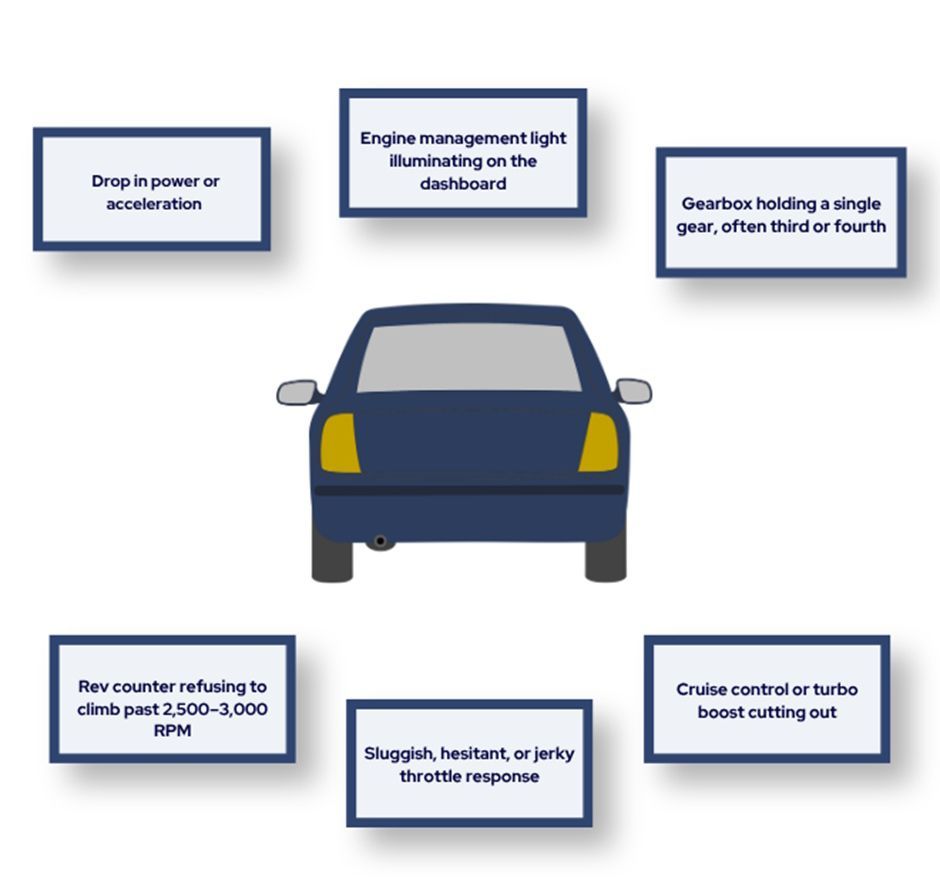
If you notice any combination of these symptoms, it's a strong sign your vehicle has entered limp mode and needs attention soon.
What to Do If Your Car Is Stuck in Limp Mode
Finding yourself with a vehicle stuck in limp mode can be unsettling, especially on a busy road or motorway, but staying calm and following a few simple steps will keep you safe.
First, don't panic. Limp mode is designed to keep you moving, just at reduced power, so you should still have enough control to pull over safely. Use your indicators early, as reduced acceleration means you'll need more time and space to change lanes or exit traffic.
Once you're safely stopped in a suitable location, such as a layby, service station, or side street, switch off the engine and restart it after a minute or two. Occasionally this clears a minor sensor glitch, though if the fault is genuine, the warning will return.
Avoid continuing a long journey in limp mode. While the car may still drive, the underlying fault won't fix itself, and in cases like overheating or low oil pressure, continuing to drive can cause serious engine damage. It's always safer to arrange diagnostics and repair before travelling further.
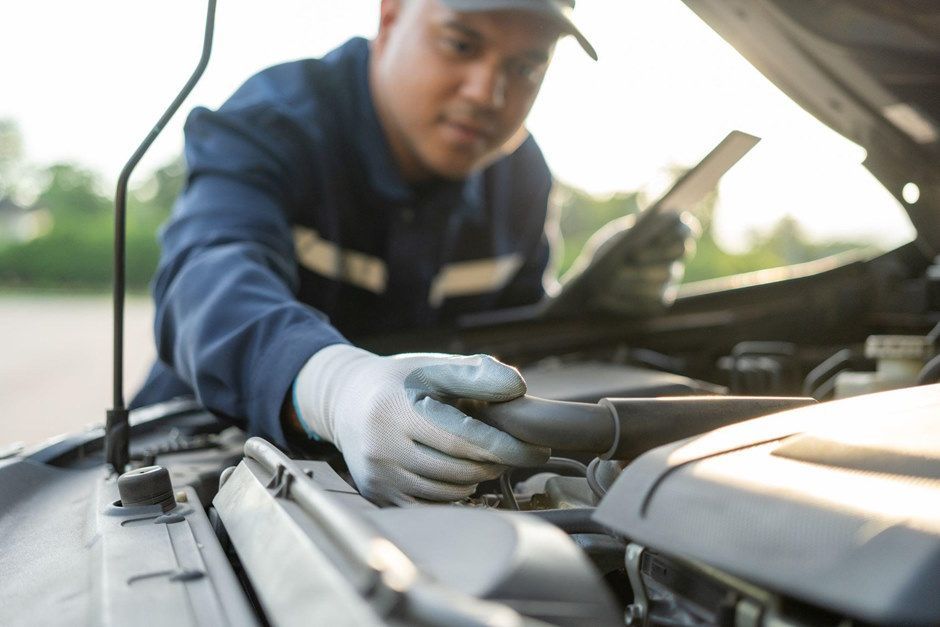
This is where a mobile mechanic makes a real difference. Rather than arranging a tow to a garage, we can come directly to you, plug in diagnostic equipment, identify the fault code triggering limp mode, and in many cases carry out the repair at the roadside.
How We Diagnose and Fix Limp Home Mode Faults
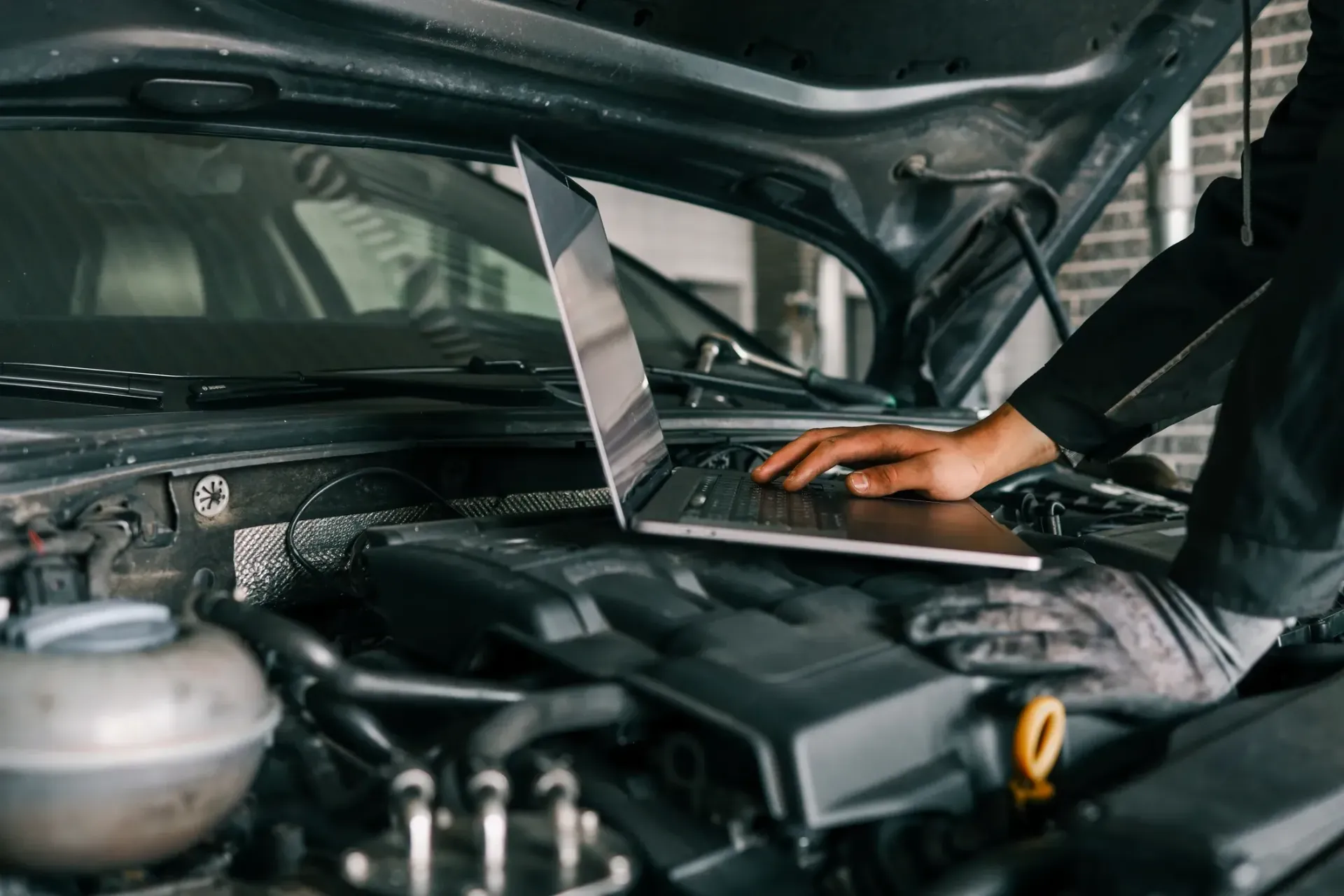
Getting to the bottom of a limp mode fault starts with proper engine diagnostics. We connect specialist equipment directly to your vehicle's ECU to read the stored fault codes, which point us towards the specific sensor, system, or component causing the issue.
From there, the fix depends on what we find. A faulty sensor might need cleaning or replacing. A blocked DPF may require a specialist mobile cleaning treatment to restore proper exhaust flow. An AdBlue fault could be as simple as topping up the fluid, or may need further investigation into the dosing system. Boost leaks and turbo faults are traced using pressure testing, while electrical faults are tracked down through the wiring loom to find loose or corroded connections.
Because we come to you, wherever you're based across Manchester and the wider North West, most limp home mode faults can be diagnosed and resolved without the cost and inconvenience of towing your vehicle to a garage.
Preventing Limp Home Mode in the Future
While not every cause of limp mode can be avoided, a few habits go a long way towards reducing the risk:
● Keep up with regular servicing, including oil and filter changes
● Address engine warning lights promptly rather than waiting for them to worsen
● Take diesel vehicles on the occasional longer drive to allow the DPF to regenerate fully
● Monitor and top up AdBlue levels before they run low
● Check coolant and oil levels periodically, especially before longer journeys
Catching small faults early is almost always cheaper and less disruptive than dealing with a full limp mode breakdown.
Get Back on the Road Safely
If your vehicle has entered limp home mode, is stuck in limp mode, or you've spotted a warning light you're unsure about, don't take the risk of continuing to drive. Our fully qualified mobile mechanics cover Manchester and the North West, typically reaching you within 30 to 60 minutes to carry out expert diagnostics and get you moving again safely.