Common Car Engine Indicator Light Causes and Fixes
Few things are quite as unsettling as glancing at your dashboard and spotting that amber or red car engine indicator light glowing back at you. Whether it has come on suddenly or has been flickering for a while, it is easy to assume the worst, but the reality is that this warning light can be triggered by everything from a loose petrol cap to a more serious engine fault. The key is knowing what to do next and acting quickly before a minor issue becomes a costly repair.
In this guide, we walk you through the most common causes of a check engine light, what the warning signs mean, and how a fast mobile diagnostic service can pinpoint the problem and get you back on the road without the need for a recovery truck.
What Is the Car Engine Indicator Light?
The car engine indicator light, sometimes labelled as the check engine light or engine management light, is part of your vehicle's onboard diagnostics system. When the system detects a fault anywhere within the engine, exhaust, fuel, or emissions systems, it stores a fault code and illuminates the warning light on your dashboard to let you know something needs attention.
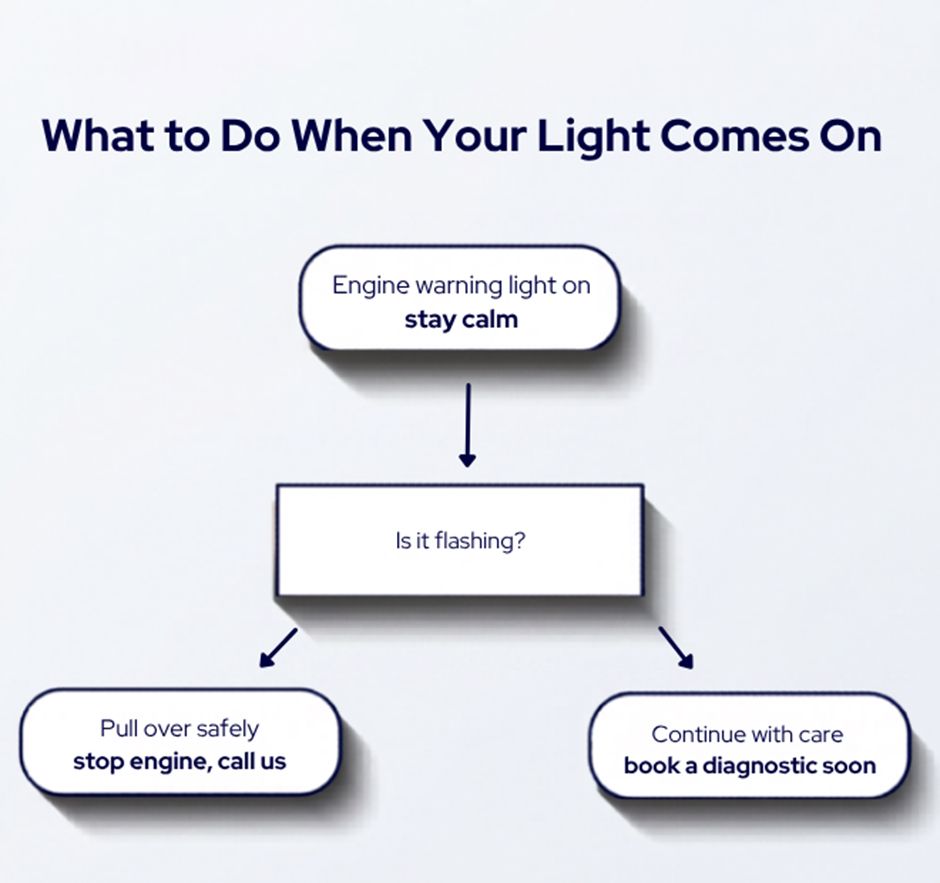
A steady light usually indicates a non-urgent fault that should still be investigated soon, whereas a flashing engine light is a more serious warning and means you should reduce speed immediately and seek professional help as quickly as possible. In either case, ignoring the light is never advisable, as continuing to drive with an undiagnosed fault can cause further damage and a much larger repair bill down the line.
Common Causes of the Check Engine Light
There are dozens of potential reasons why the engine light on your car might come on, but some faults are far more common than others. Understanding the most likely culprits can help you make an informed decision about how urgently you need to seek help.
Faulty Oxygen Sensor
One of the most frequent causes of a check engine light is a failing oxygen (O2) sensor. These sensors monitor the level of unburnt oxygen in the exhaust gases and feed that data back to the engine management system, helping to maintain the correct air-to-fuel ratio. When a sensor fails, your engine can run too rich or too lean, reducing fuel efficiency and increasing emissions. Left unresolved, a faulty O2 sensor can also cause damage to the catalytic converter, turning what is a relatively affordable repair into a significantly more expensive one.
Replacing an oxygen sensor is a straightforward job for a qualified mechanic, and a proper diagnostic scan is the most reliable way to confirm which sensor is at fault before any parts are ordered.
Loose or Faulty Fuel Cap
It may sound almost too simple, but a loose, cracked, or missing fuel cap is one of the most common reasons the engine light on a car activates. The fuel cap forms a seal that maintains pressure within the fuel system and prevents petrol or diesel vapour from escaping into the atmosphere. When the seal is broken, the evaporative emission control system detects a leak and triggers the warning light.
If your engine light has just come on and you have recently filled up with fuel, it is always worth checking whether the cap is properly tightened before seeking professional help. If the light remains on after a short drive, however, it is time to get a proper diagnostic check carried out.
Catalytic Converter Problems
The catalytic converter reduces the harmful pollutants in your exhaust gases before they leave the vehicle. Over time, it can become clogged or damaged, particularly if other engine issues, such as faulty oxygen sensors or misfires, have been left unaddressed. A failing catalytic converter will often trigger the check engine light and may also cause a noticeable drop in engine performance, reduced fuel economy, and, in some cases, a sulphurous smell from the exhaust.
Catalytic converter replacements can be costly, which is why it is always better to catch related faults early through a proper diagnostic check before the converter itself is affected. Having a qualified mechanic read the stored fault codes at your location means you get an accurate answer about the cause before any unnecessary parts are replaced.
Spark Plug or Ignition Coil Issues
Worn spark plugs or a failing ignition coil are another frequent cause of a check engine light, particularly in older vehicles or those that have not had a recent service. Spark plugs ignite the air-fuel mixture inside the engine cylinders, and when they are worn or misfire, the unburnt fuel that passes through can cause serious damage to the catalytic converter. A misfire will often be accompanied by a rough-running engine, loss of power, and occasionally a visible hesitation during acceleration.
What Should You Do When the Engine Light Comes On?
The first thing to do when you notice the car engine indicator light is to stay calm and pay attention to how the car is behaving. Is the light steady or flashing? Are there any unusual sounds, smells, or changes in performance? If the light is flashing, the engine is running roughly, or there is any sign of overheating, it is advisable to pull over safely and switch the engine off as soon as it is safe to do so. A flashing engine light paired with any of these symptoms indicates an active misfire or serious fault that could cause further damage if you continue driving.
If the light is steady and the car seems to be running normally, you can continue driving with care, but you should arrange a diagnostic check as soon as possible. Avoid dismissing a steady engine light simply because the car feels fine; many faults, such as failing sensors or emissions issues, produce no noticeable drivability symptoms in the early stages but can worsen considerably if left unaddressed.
How a Mobile Mechanic Can Help
One of the most common questions we hear is whether it is safe to drive to a garage with the engine light on. In some cases, it is, but in others, particularly if the light is flashing or the car is behaving unusually, driving any further than necessary risks causing additional damage. This is where a mobile mechanic, such as Williams Technicians makes a real difference. Rather than driving a potentially compromised vehicle to a fixed workshop, we come to you.
Using professional-grade equipment, we read the fault codes stored within your vehicle's system and identify the precise cause of the warning light. From there, many faults can be resolved on the spot, whether that means replacing a sensor, clearing a fault after a minor fix, or carrying out further repair work at the roadside. You can find out more about what is involved in our engine diagnostics service on our page.
The Advantage of Being Seen at Your Location
Having the diagnostic carried out where the car is sitting means we can observe the vehicle in its current state, which is particularly valuable for intermittent faults that might not be actively showing symptoms by the time a car reaches a workshop. It also removes the risk of driving a vehicle with an active fault any further than necessary, which can be especially important if the engine light has come on alongside other warning signs.
Our mobile engine diagnostics service covers Manchester and the wider North West. The sooner the fault is identified, the quicker and more cost-effectively it can be resolved.
Can You Clear the Engine Light Yourself?
Some drivers attempt to clear the check engine light by disconnecting the car battery or using a consumer-grade diagnostic reader purchased online. Whilst this will often turn the light off temporarily, it does not fix the underlying problem.
Proper check engine light repair means diagnosing and resolving the fault, not simply switching the warning off. Our team at Williams Technicians carries professional diagnostic tools that go beyond basic code reading, allowing us to access live data streams, perform component-level testing, and confirm that a fault has been genuinely rectified before clearing any codes.
When the Engine Light Is Part of a Bigger Picture
In some instances, the car engine indicator light is just one of several dashboard warnings that appear simultaneously, or it arrives alongside other symptoms such as the vehicle entering limp home mode. Limp mode is a protective function built into the engine management system that restricts engine power and speed to prevent further damage when a serious fault is detected. If yourvehicle has gone into limp mode, the engine light will almost certainly be illuminated alongside it.
Get Your Engine Light Diagnosed Today
If the engine light on your car has come on and you are not sure what to do next, we are here to help. We offer a fast, professional mobile engine diagnostics service across Manchester and the North West, coming directly to your home, workplace, or the roadside to identify and resolve the fault without the hassle of a garage visit.
Do not wait for a minor issue to develop into a major repair. Call us today on 0161 286 1915 and let our fully qualified team carry out a thorough engine diagnostic and get you back on the road with confidence.